The Lady of the Lake: Excalibur and the Dark Waters of Dozmary Pool

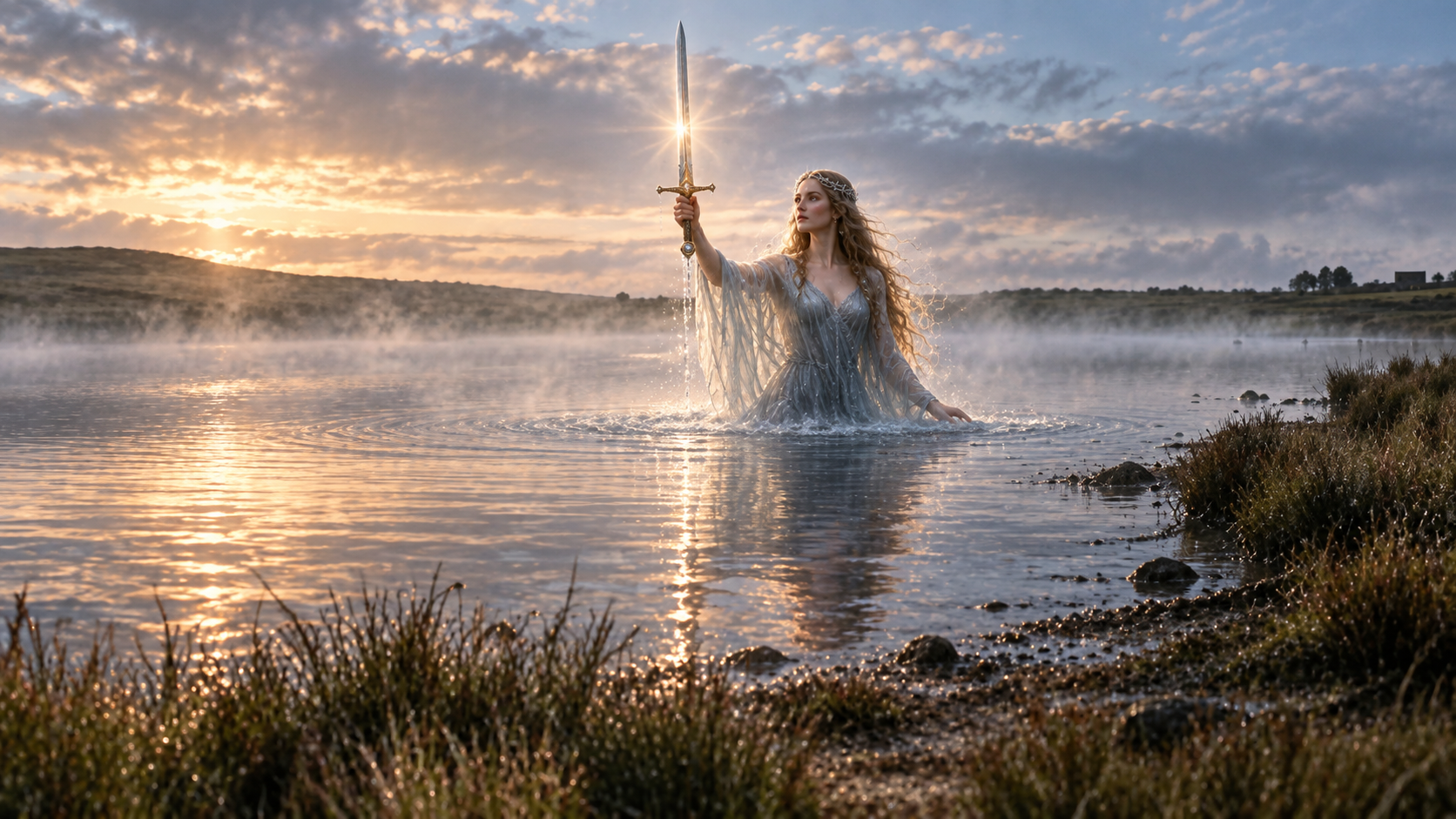
High on Bodmin Moor, where the land seems to empty itself of roads, houses and people, there is a lake.
Dozmary Pool is not large. It has no ruined castle on its shore, no grand monument announcing what is supposed to have happened here. On a grey day it can appear almost colourless, a sheet of dark water surrounded by rough grass and open moor. Yet for generations, this lonely Cornish pool has been claimed as one of the most extraordinary places in British legend: the home of the Lady of the Lake and the final resting place of Excalibur.
The story belongs to King Arthur’s last hours.
Arthur has fought his final battle at Camlann. His kingdom is broken, his knights are dead or scattered and the king himself is mortally wounded. Knowing that his life is ending, he calls upon one of his surviving knights, Sir Bedivere, and gives him one last command.
Take Excalibur to the water.
Throw it in.
Bedivere cannot bring himself to do it. The sword is too beautiful, too valuable, too bound up with everything Arthur has been. He hides it instead and returns to the dying king, claiming that he has obeyed.
Arthur asks what he saw.
Nothing unusual, Bedivere tells him.
The king knows immediately that he is lying.
Bedivere returns to the lake, but once again his courage fails him. Only on the third journey does he finally hurl Excalibur out across the water.
And then something impossible happens.
A hand and arm rise from the lake. The hand catches the sword, holds it aloft and brandishes it before both disappear beneath the surface.
Excalibur is gone.
In Sir Thomas Malory’s Le Morte Darthur, published in 1485, this is among the final images of Arthur’s reign. The sword that helped define the king is returned to the strange otherworld from which it came. But Malory does not tell us that the lake was Dozmary Pool. The precise location is left unnamed.
That has never stopped people trying to find it.
The Lady beneath the water
The Lady of the Lake is not a simple character with a single story. Arthurian literature developed over hundreds of years, and different writers gave the mysterious woman of the water different identities and roles. In some traditions she is associated with the giving of Excalibur; in others she raises Lancelot or becomes entangled with Merlin. Later retellings often merge these different women into the single figure now popularly known as the Lady of the Lake.
What remains remarkably consistent is the imagery.
Water separates Arthur’s world from somewhere else.
A sword can emerge from it.
A hand can rise from it.
And at the end of the king’s life, what was borrowed must be returned.
Over time, Dozmary Pool became Cornwall’s answer to the unnamed lake.
It is easy to see why.
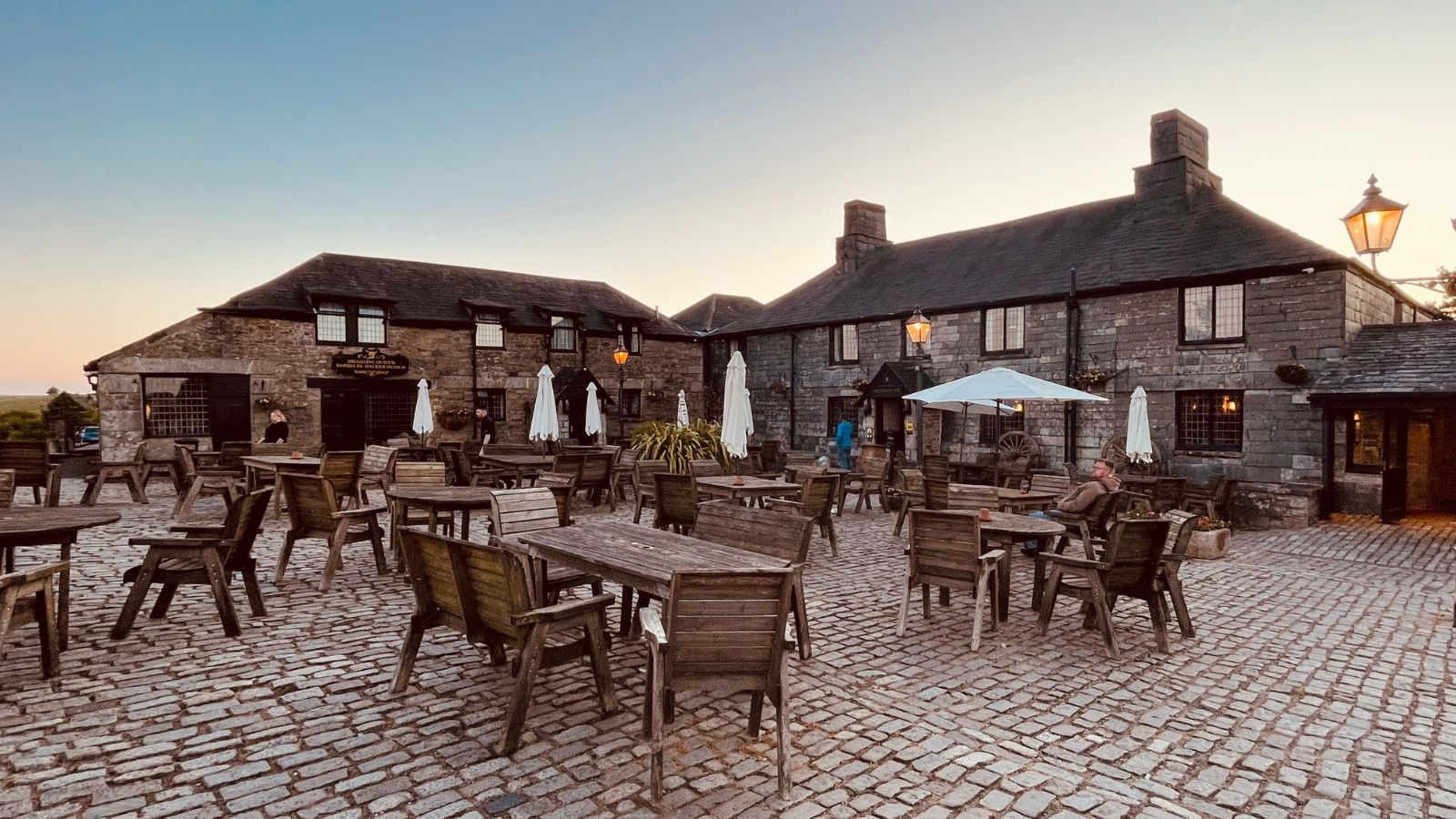
The pool lies high on Bodmin Moor, around two kilometres south of Bolventor and Jamaica Inn. It sits in an exposed landscape of granite, marsh and open sky, within one of the wildest parts of Cornwall. The pool itself formed after the last Ice Age and is today recognised for its ecological importance as well as its legends.
For centuries there was another useful detail.
People said it was bottomless.
A bottomless lake on a lonely moor was exactly the kind of place into which a magical sword might disappear forever.
Unfortunately for the legend, Dozmary Pool is not bottomless at all.
As early as 1602, the Cornish antiquarian Richard Carew described it as nowhere more than around nine feet deep. The pool has even dried considerably during periods of severe drought.
No medieval sword has emerged from the mud.
So far.
Did Arthur really come to Dozmary Pool?
This is where the story becomes particularly interesting.
Today the association seems ancient. Cornwall’s tourism literature sends visitors to Dozmary Pool as part of the Arthurian trail, alongside Tintagel and sites associated with Arthur’s supposed final battle.
But earlier descriptions of Dozmary Pool concentrate on completely different legends.
The strongest evidence suggests that the association between Dozmary and Excalibur emerged only in the late Victorian period, during the great 19th-century revival of enthusiasm for King Arthur. Alfred, Lord Tennyson’s hugely influential Idylls of the King, published across the second half of the century, helped return Arthur to the centre of British popular imagination. Later Cornish storytelling began connecting the unnamed lake of Arthurian literature with the brooding waters of Dozmary.
Visit Cornwall itself now acknowledges the problem rather cheerfully, describing the Dozmary association elsewhere on its site as a late-19th-century piece of storytelling rather than an ancient local tradition.
That does not make the story less interesting.
In some ways it makes it more so.
Legends do not always arrive fully formed from the distant past. Sometimes landscapes acquire stories because generations of people look at them and decide that a story belongs there.
And if you were going to choose a lake for Excalibur, Dozmary is a very convincing candidate.
A lake already haunted
Long before Arthur arrived in the local imagination, Dozmary Pool already had its ghosts.
Its most famous older legend concerns Jan Tregeagle, one of the great damned figures of Cornish folklore. In the tale, Tregeagle is condemned to impossible labours as punishment for his sins. One of them requires him to empty Dozmary Pool using nothing more than a limpet shell with a hole in it.
Night after night he works while the Devil and his hounds wait for him to fail.
According to the Cornwall Heritage Trust’s telling of the legend, Tregeagle’s cries once echoed across the moor as he desperately tried to complete his endless task. Eventually one of the hell-hounds knocked the shell from his hand and Tregeagle fled across Cornwall with the infernal pack behind him.
The story may help explain why Dozmary was already regarded as something more troubling than an ordinary lake.
Before Excalibur was imagined beneath its surface, Hell was already waiting on its shore.
Visiting Dozmary Pool today
There is no Lady waiting beside the water.
There are no knights.
There is not even very much infrastructure to tell you that you have arrived at one of Britain’s most famous legendary landscapes.
That is part of its appeal.
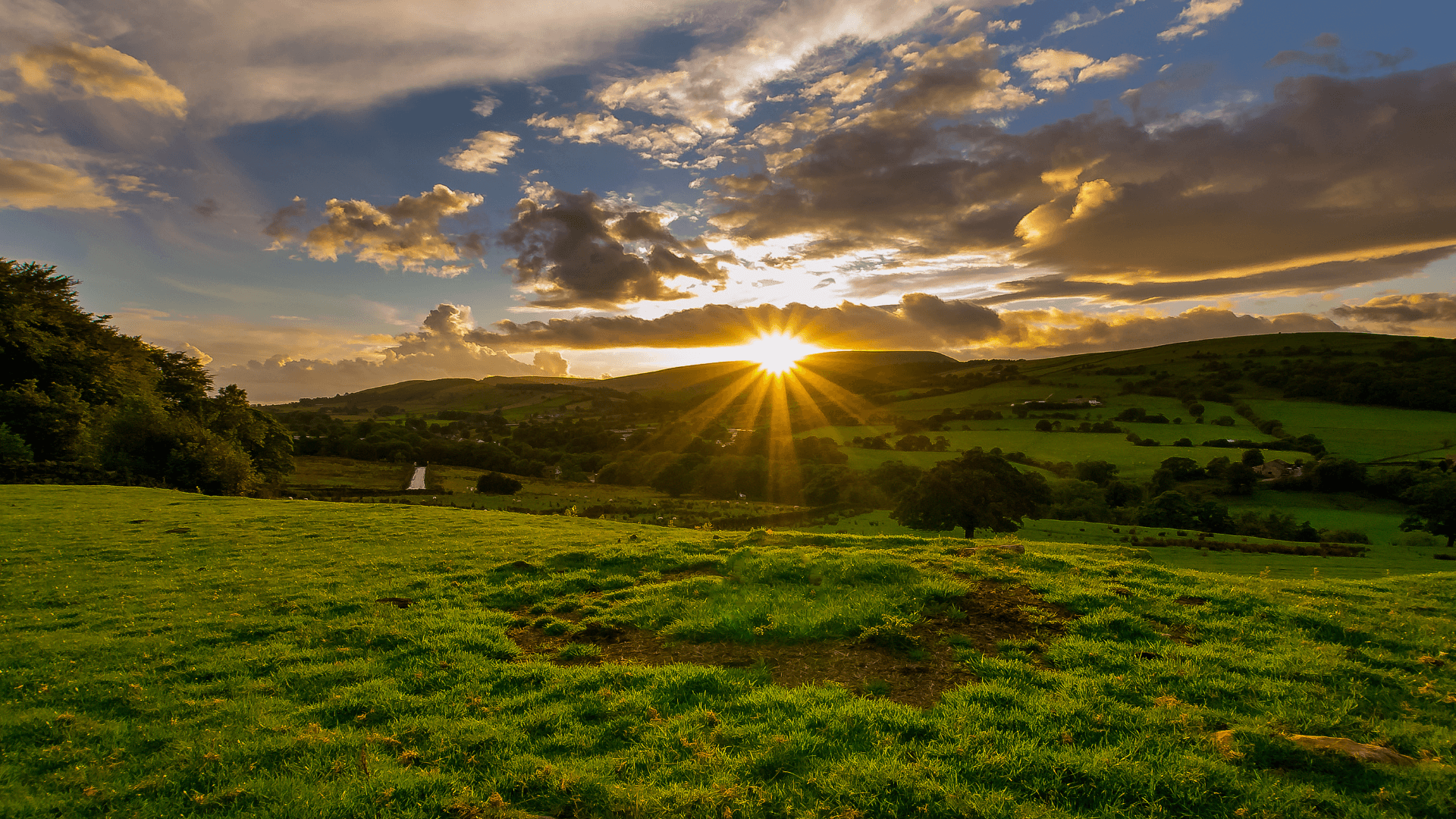
Bodmin Moor remains capable of feeling remarkably empty. The surrounding landscape is grass, bog, granite and enormous skies, with Cornwall’s highest ground rising nearby. In clear weather Dozmary can look peaceful. When the cloud drops and the wind moves across the water, it becomes something else entirely. Bodmin Moor is one of Britain’s wettest upland landscapes, and mist can erase distance remarkably quickly.
Stand on the shore and the sensible part of your mind knows exactly what is in front of you.
A shallow post-glacial lake.
A protected natural habitat.
A body of water whose supposed bottomlessness was disproved centuries ago.
But stories have a habit of surviving facts.
You look across the surface anyway.
Because the legend does not ask you to believe that King Arthur definitely stood here. It asks something much easier.
It asks you to imagine Bedivere standing alone at the edge of the water, carrying the last object belonging to a dying king.
It asks you to picture the sword turning through the air.
And then, just before it touches the lake, a pale hand breaking the surface to catch it.
For a moment, on Bodmin Moor, that does not seem impossible at all.