
Æthelflæd, Lady of the Mercians
c. 870 – 918
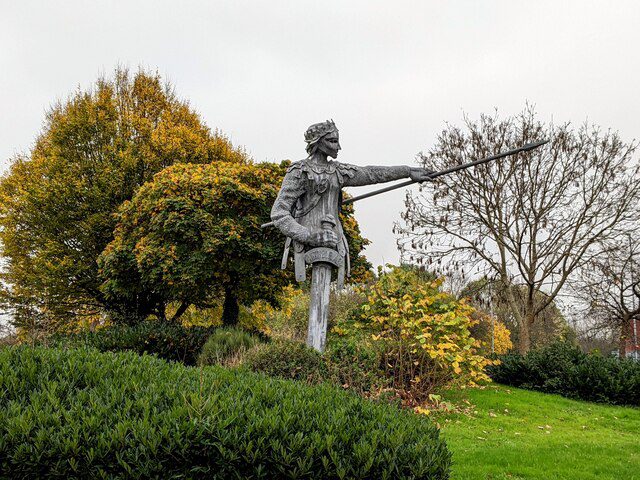
Æthelflæd, Lady of the Mercians, was one of the most formidable leaders of early medieval England. Living in the late 9th and early 10th centuries, she helped hold the line against Viking armies and then pushed it forward, shaping the map of England long before the country truly existed as a single kingdom.
She was the daughter of Alfred the Great of Wessex, raised in a world where politics and survival were inseparable. When she married Æthelred, ruler of Mercia, the alliance strengthened the English resistance to Viking control. But Æthelflæd was never just a royal connection. As her husband’s health declined, she increasingly took on the work of rule and, after his death, she led Mercia in her own right. Contemporary sources don’t treat her as a figurehead. They describe a ruler making decisions, directing strategy and commanding loyalty.
Her legacy is written into places as much as chronicles. She oversaw the building and reinforcement of burhs, fortified towns that acted as safe havens, supply hubs and springboards for campaigns. Under her leadership, Mercia recovered key territory from Viking power, including important centres such as Derby and Leicester. This was not only military success but also a statement of authority: a leader who could protect communities, organise resources and restore stability.
Stories Featuring This Figure
-

The Story of Warwick Castle
I live close enough to Warwick Castle that it has become a recurring landmark in my life rather than a distant icon. I have…
